First impressions and setting
Story choices and characters
Combat and abilities
Open world design and navigation
Side activities and world events
Progression, loot and microtransactions
Mythological encounters and legendary creatures
Strengths and weaknesses at scale
Legacy of the first blade & fate of atlantis DLC
First impressions and setting
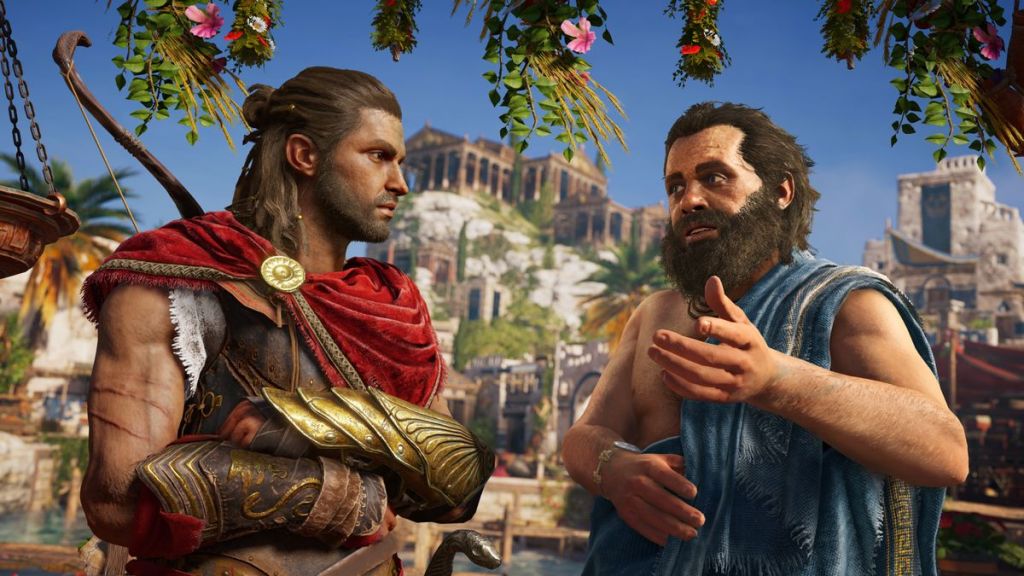
From the very first moments of Assassin’s Creed Odyssey, it becomes clear that Ubisoft aimed to deliver a massive, ambitious take on the ancient world. The game doesn’t ease you in gently it throws you into the heart of the Peloponnesian War, with burning ships, violent battles, and stunning vistas setting the tone for what’s to come. The size and scope are undeniably impressive, promising an epic journey across islands, mountains, and seas steeped in legend and history.
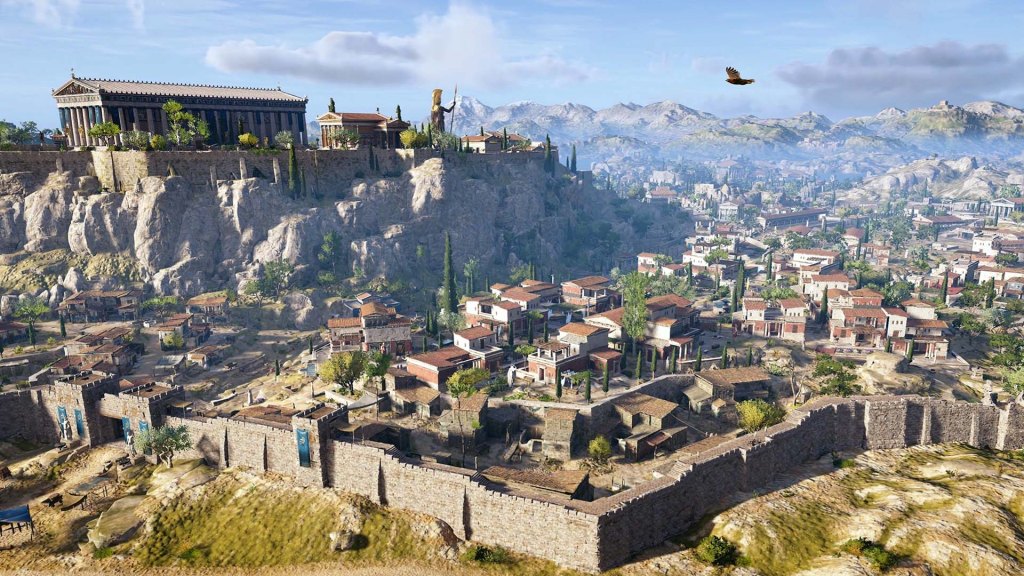
The art direction does a fantastic job of blending myth and realism. Temples rise against golden sunsets, villages bustle with daily life, and iconic landmarks like the Statue of Zeus and the Parthenon command attention. The visual fidelity and architectural detail create a world that is not just large but richly textured, rewarding players who take time to explore it at their own pace.
However, the first few hours can also feel overwhelming. With dozens of markers on the map, early introductions to mercenary systems, conquest battles, and naval exploration, players may initially struggle to find a rhythm. Odyssey doesn’t hold your hand it expects you to dive deep, make choices, and carve your own path. For some, that’s exhilarating; for others, it may be disorienting.
Ancient greece brought to life
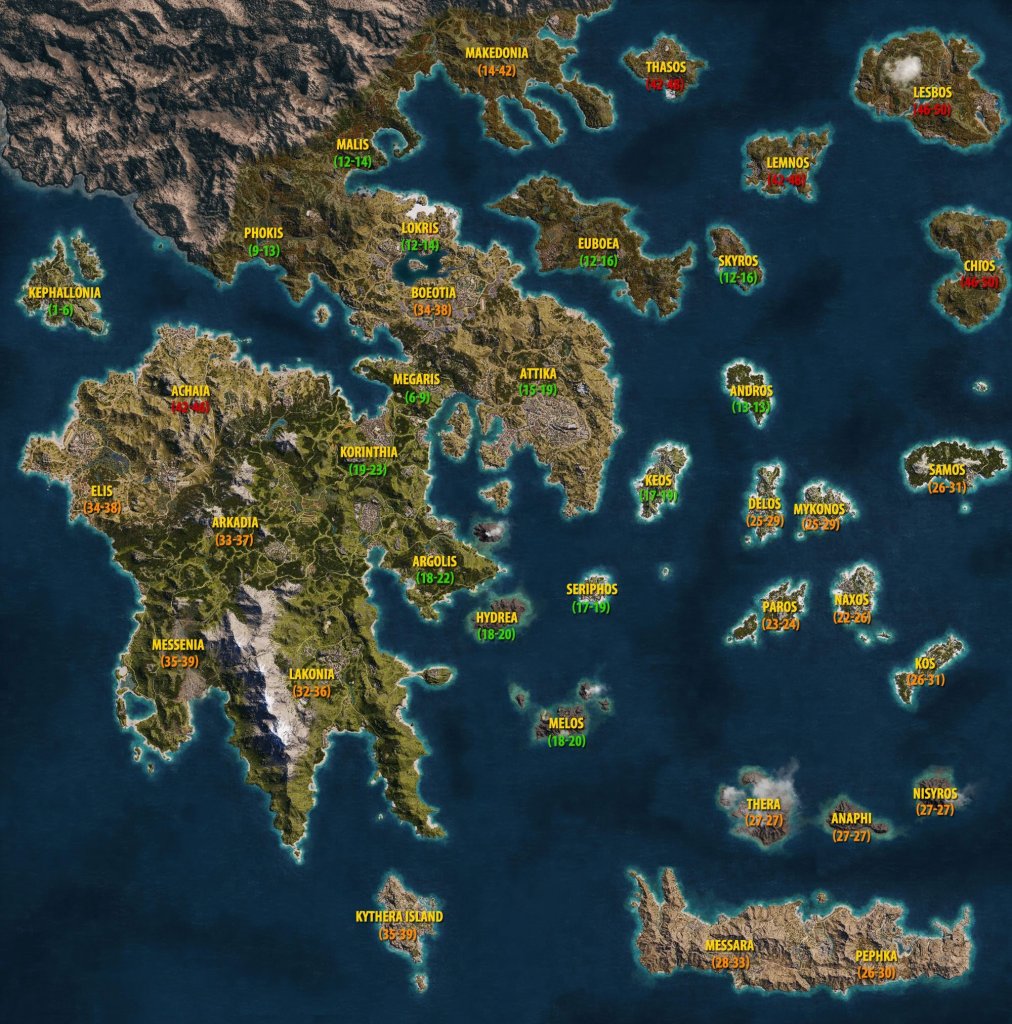
The heart of Assassin’s Creed Odyssey lies in its recreation of Classical Greece. Ubisoft crafted a sprawling version of the Aegean world, from the sun-soaked coasts of Kephallonia to the sacred sites of Delphi and Athens. Each region feels distinct, shaped by the terrain, local factions, and myths.
Cultural authenticity is strong in visuals and dialogue. You’ll find yourself visiting the Oracle at Delphi, debating with Socrates, or wandering into an impromptu theater performance in Athens. The fusion of historical fact and artistic liberty paints a version of Greece that’s as educational as it is entertaining. It may not always be strictly accurate, but it never fails to be immersive.
The use of ancient Greek language, references to real events, and the inclusion of legends like the Minotaur or Medusa deepen the connection to this legendary period. Every statue, temple, or fortress you encounter seems to have a story and often a secret waiting to be uncovered.
Epic scale vs empty exploration
While Odyssey’s world is visually breathtaking and historically dense, it’s not immune to criticism. Many players and critics noted that the map, though enormous, often feels bloated with filler content. Points of interest repeat the same bandit camp, fort, or loot chest template. The sheer size can lead to fatigue, especially when side activities begin to blur into one another.
The fast travel system, naval routes, and mount-based travel help, but they can’t entirely mask the repetition in design. Exploration can shift from thrilling to mechanical clearing icons more than discovering wonders. This is where Odyssey’s ambition slightly overshoots execution. It wants to be massive and meaningful, but sometimes it just feels massive.
Yet for all its excess, when Odyssey does slow down during a story-rich side quest, a mythological encounter, or a quiet ride through olive groves it captures something few games manage: a sense of place, of being somewhere ancient, sacred, and full of possibility.
Story choices and characters
One of the standout features of Assassin’s Creed Odyssey is its narrative ambition. For the first time in the series, player choice becomes a driving force behind how the story unfolds from who lives or dies, to how relationships evolve, and even which ending you get. It’s a deeply personal journey rooted in identity, legacy, and moral conflict.
At its core, Odyssey tells the story of a broken family torn apart by war, betrayal, and destiny. Rather than simply chasing Templars across a historical setting, you’re digging through layers of personal trauma and uncovering the truth behind a vast, secretive cult. The story takes players across multiple arcs from mythological encounters to deeply emotional confrontations and offers branching paths that shape your experience.
Unlike earlier games where the story mostly happened to the character, in Odyssey, your choices are the story.
Family drama and cult of kosmos
The heart of the narrative revolves around your family. As a child of Sparta abandoned by their own kin, your character’s quest begins with a search for answers and slowly unravels into a tale of redemption and revenge. The Cult of Kosmos, a shadowy organization manipulating events behind the scenes, becomes the thread that connects your shattered past to the larger political turmoil of the Greek world.
This cult is both your enemy and your link to everything you’ve lost. Each cultist has ties to power structures across Greece generals, politicians, even family members. Uncovering their identities and eliminating them feels like solving a giant web of conspiracy, and each assassination brings you closer to the truth.
The emotional weight of the family arc reuniting with your mother, confronting your sibling, understanding your origins gives the game a sense of depth that goes beyond most open-world RPGs. It’s not just about killing targets; it’s about making peace with your past.
Kassandra or Alexios
Odyssey offers two protagonists: Kassandra and Alexios. While the story beats remain largely the same regardless of your choice, the delivery and tone shift subtly. Kassandra is widely considered the more compelling and better-acted of the two, often praised for her charisma, depth, and emotional range.
Whichever character you choose, they are not a silent assassin. They talk, joke, argue, and evolve based on your decisions. This is a fully voiced, RPG-style protagonist more akin to Geralt from The Witcher than Ezio or Bayek. The character’s identity is shaped by how you respond to the world, not just by the missions you take.
Your chosen hero’s journey is packed with moments of vulnerability, strength, and moral conflict. Whether you play as a compassionate peacemaker or ruthless mercenary, the story adapts to reflect those choices.
How dialogues and decisions alter endings
Perhaps Odyssey’s most ambitious narrative feature is its branching endings. Choices made across dozens of hours some subtle, others dramatic all lead to one of several possible conclusions. Will your family reunite? Will key allies survive? Will you dismantle the Cult entirely?
Dialogues often present nuanced options. It’s rarely a simple «good» or «bad» path. Instead, you’re constantly navigating shades of gray: Do you kill a tyrant to stop future bloodshed, or spare him in the name of honor? Do you lie to protect someone’s feelings, or tell the harsh truth?
These decisions ripple outward, impacting not just the final scenes but also companion arcs, regional stability, and even the fate of random villagers. Ubisoft’s RPG approach transforms Odyssey into a personal narrative one where your morality defines the world you shape.
Combat and abilities
Assassin’s Creed Odyssey offers a fast-paced, high-impact combat system that blends traditional Assassin’s Creed stealth mechanics with RPG-style active abilities and real-time reactions. Unlike earlier entries that leaned into counter-based fighting or stealth-heavy takedowns, Odyssey is loud, flashy, and demanding especially on higher difficulties.
The combat is built around adrenaline, cooldowns, and timing, where every fight feels more like an action RPG than a typical stealth title. You’re not just sneaking through fortresses you’re kicking enemies off cliffs, chaining abilities, and dashing between targets like a mythic warrior. It feels visceral, fluid, and customizable to your playstyle.
But with that power comes fatigue and not just in terms of stamina bars. Long fights, aggressive AI, and endless camps mean players must constantly adapt or risk repetition and burnout.
Adrenaline-based combat and skills
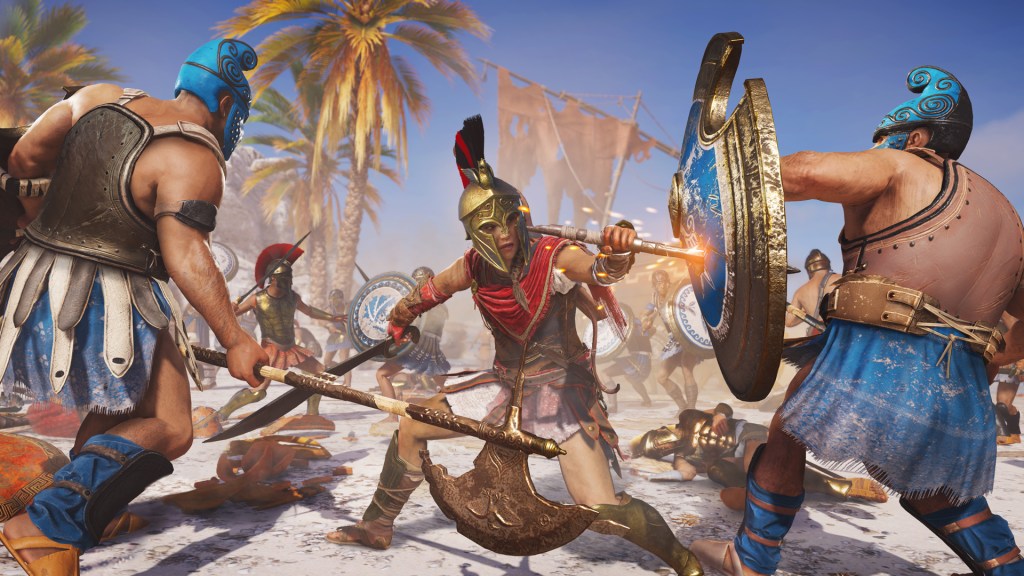
Combat in Odyssey revolves around the Adrenaline system. As you land hits, dodge attacks, or parry at the right time, you build adrenaline a resource used to trigger powerful abilities. These abilities range from Spartan Kick (yes, the one from the trailers) to Ring of Chaos, area-of-effect strikes, assassination chain combos, and even ranged deathblows.
Instead of just swinging a sword, you’re constantly making micro-decisions about when to use your powers. Want to break a shield? Use Shield Breaker. Want to recover health mid-fight? Activate Second Wind. Every combat scenario becomes a dance of timing, spacing, and cooldown management.
It turns every large-scale battle into a kind of puzzle: which tools to use, how to manage adrenaline, and when to disengage.
Balancing warrior, hunter, Assassin trees
Odyssey offers three skill trees that support vastly different playstyles:
- Warrior focuses on melee combat swords, heavy attacks, rage-based skills.
- Hunter empowers your archery, offering headshot bonuses, explosive arrows, and animal taming.
- Assassin sharpens stealth kills, backstab damage, and silent movement.
You’re not locked into one. Instead, you can mix and match depending on how you want to approach missions. Want to enter quietly, clear half the camp, and then explode into full combat when discovered? Perfectly viable. Some players go full Hunter, killing entire forts with headshots from afar. Others go pure Warrior and storm the front gates.
The game lets you respec at any time for a small amount of gold, encouraging experimentation. Boss fights may push you toward a more defensive or aggressive style depending on who you’re facing.
Elite enemies and combat fatigue
Odyssey introduces mercenaries, cultists, and mythical beasts all with distinct fighting styles, strengths, and weaknesses. Mercenaries track you when your bounty rises, often mid-mission, creating chaotic three-way battles. Some use poison, others fire, some ride animals and the stronger ones even mimic your own abilities.
Boss fights aren’t just about stats they require patience, observation, and clever ability use. Some enemies are damage sponges, requiring long fights. Others punish mistakes with deadly combos.
And this is where combat fatigue can set in. With constant random encounters, respawning camps, and bounty hunters popping up often, even the most thrilling mechanics can feel exhausting over time. The key is pacing yourself mixing in exploration, stealth, and story beats so combat remains engaging and not overwhelming.
Despite the risk of burnout, Odyssey’s combat remains one of the most versatile and explosive in the franchise especially when you fully embrace the system and tailor it to your strengths.
Open world design and navigation
The open world of Assassin’s Creed Odyssey is one of the largest in the franchise spanning across mainland Greece and its many surrounding islands. It’s a world built to impress: massive in scale, beautifully lit, and rich in historical and mythical landmarks. From the cliffs of Sparta to the bustling city of Athens, the sense of place is undeniable.
However, with great scale comes a unique challenge repetition. While the environments are varied in theme, the content that fills them can often feel familiar. Forts to clear, leaders to assassinate, treasures to find the gameplay loop repeats across hundreds of locations. This formula works in moderation, but players looking for handcrafted variety may eventually find the open world more busy than meaningful.
Vast map vs sense of repetition
Odyssey’s map is enormous over 100 square kilometers and includes forests, mountains, deserts, cities, and a multitude of islands. Every region has its own aesthetic, culture, and political status. But while visually diverse, many of the activities you’ll find follow a predictable structure: synchronize viewpoints, loot chests, clear strongholds, and complete side quests.
Some players thrive in this kind of looped exploration. Others may find it overwhelming or formulaic. The game encourages exploration, but rarely surprises in how that exploration plays out. This balance between scale and substance is one of Odyssey’s most debated design choices.
Still, the map’s beauty and detail are hard to ignore it’s one of the most photogenic open worlds in gaming, with sun-drenched coasts, snow-capped peaks, and legendary landmarks from Greek mythology.
Naval travel and Island exploration
Naval gameplay makes a grand return in Odyssey, building on systems introduced in earlier titles like Black Flag. Your ship, the Adrestia, becomes your mobile base and lifeline across the Aegean Sea. You can upgrade it with better hulls, ramming speed, and a crew of lieutenants who provide passive buffs and combat advantages.
Naval battles are frequent, especially when your bounty rises or you choose to raid merchant fleets. The combat is fast, satisfying, and strategic involving volleys of arrows, firebombs, and ramming maneuvers. Boarding enemy ships adds a nice melee touch, turning sea battles into chaotic brawls.
Island exploration adds further depth. Some islands are home to small villages with side quests, others to cult hideouts or ancient ruins. There are even mythical regions tied to endgame content and legendary creatures. Sailing between these destinations offers a break from land-based grinding and reminds you of the freedom Odyssey provides.
Though not as central as in Black Flag, the naval system helps break the monotony of land exploration and gives Odyssey a distinct rhythm a blend of war and wonder across land and sea.
Side activities and world events
While Assassin’s Creed Odyssey delivers a massive main storyline, it’s the side content that truly fills the world with life or, depending on your taste, with noise. From bounty contracts and message board quests to personal side stories and mini-events scattered across Greece, the game offers countless distractions. Some are forgettable filler, others rival the main quests in writing and emotional weight.
The key to enjoying Odyssey’s world is choosing where to invest your time. Not all content is created equal, but among the repetitive tasks lie moments of storytelling brilliance and surprisingly heartfelt interactions.
Contracts, world events and mini-stories
Contracts are one of the most common forms of side content. You’ll receive them from message boards in every town, usually asking you to kill soldiers, destroy ships, or collect materials. While mechanically repetitive, they serve well for grinding experience or resources.
World events and mini-stories, however, shine brighter. These are often unmarked quests triggered by chance encounters: a stranded traveler, a merchant with a secret, or a village plagued by a curse. They may not appear in your quest log but offer meaningful (and often strange or humorous) interactions that enrich the game world.
These smaller moments give Greece a sense of unpredictability and humanity showing that not every narrative needs to be about gods and politics.
Quality and continuity of side quests
Odyssey’s side quests vary widely in quality. Some especially those tied to named characters or multi-part stories feature branching paths, unique voice acting, and real moral dilemmas. Others feel like filler content created for volume rather than depth.
One of Odyssey’s strengths is that even minor side quests can loop back into the main narrative. A villager you saved earlier might reappear hours later with new information, or a decision you made in a random event could affect a later region. These narrative callbacks give the illusion of continuity in a sprawling world.
However, not all content gets this treatment. Players may feel burned after spending 15 minutes completing a generic fetch quest only to receive a handful of drachmae and a generic sword. For those chasing narrative satisfaction, sticking to character-driven side missions is key.
Despite inconsistency, the sheer quantity of content ensures that everyone will find something worth their time. Whether you’re a completionist or a casual explorer, Odyssey’s world offers countless stories you just have to dig for the best ones.
Progression, loot and microtransactions
In Assassin’s Creed Odyssey, progression revolves heavily around loot acquisition and gear optimization. Leveling up, collecting epic items, customizing engravings, and navigating the economy are central to the gameplay loop but they’re not without friction. While the RPG systems offer depth, they also introduce grind and encourage optional (yet tempting) shortcuts through microtransactions.
The balance between rewarding exploration and pushing monetization is a point of division among players. Some embrace the grind, while others feel pressured into spending money for smoother progression.
Equipment system and gear Upgrades
Odyssey features an extensive loot system with five gear rarity levels, each with increasing perks. Players can equip armor pieces, melee and ranged weapons, and manage their stats by swapping gear tailored to assassin, warrior, or hunter builds.
Gear can be upgraded at blacksmiths to scale with the player’s level an essential feature given how quickly enemies scale up. However, upgrades come at a high resource and currency cost, forcing players to make tough choices or spend hours farming materials.
The visual customization system also lets players transmog gear, meaning you can keep the stats of one item while applying the appearance of another. This system is a fan-favorite, allowing for both fashion and function.
Engravings, blacksmith system, and inflation
Engravings are special bonuses that can be added to gear, unlocked through exploration, achievements, and certain story milestones. They range from simple stat boosts (like +10% critical damage) to powerful effects such as healing on kill or elemental resistance.
The blacksmith system, while essential, contributes to the feeling of inflation in the game. As you level up, gear quickly becomes obsolete unless upgraded and upgrades cost a lot of drachmae, iron, wood, and leather. Over time, the cost of keeping your build optimized can become burdensome.
This leads to the sense of economy inflation prices go up, loot gets stale fast, and progression feels artificially stretched to promote store bundles and XP boosts.
Microtransaction impact on gameplay
While Odyssey is fully playable without spending real money, Ubisoft’s monetization strategy looms over the experience. Players can purchase cosmetic packs, powerful weapons, crafting materials, and most controversially XP and gold boosters.
These boosters double your rewards and significantly reduce the grind, making them almost a necessity for players who want to progress at a natural pace without sinking dozens of hours into repetitive tasks. This raises the question: was the grind designed intentionally to nudge players toward spending?
Although entirely optional, the presence of such boosters alters the game’s pacing. Those who pay may feel the story flows better and upgrades feel more accessible, while those who don’t might experience burn-out.
In the end, Odyssey walks a fine line between RPG depth and monetization pressure. The core systems are rich, but the surrounding grind and store integration cast a shadow over what could have been a more balanced progression experience.
Mythological encounters and legendary creatures
One of the boldest and most memorable aspects of Assassin’s Creed Odyssey is how it blends historical fiction with Greek mythology. While the game is rooted in a real-world setting ancient Greece during the Peloponnesian War it doesn’t shy away from the legendary creatures and divine forces of Hellenic myth. These encounters add a supernatural flair to the otherwise grounded narrative, offering unforgettable boss fights and lore-rich quests that challenge both combat and curiosity.
Instead of presenting mythology as pure fantasy, the game cleverly reinterprets these myths through the lens of the Isu an ancient advanced race central to the overarching Assassin’s Creed lore. This allows the developers to introduce monsters, magic, and ancient artifacts in a way that feels both mystical and grounded within the franchise’s sci-fi canon.
Battles with medusa, cyclops, minotaur
Each of the mythological boss fights in Odyssey is carefully crafted to feel distinct, atmospheric, and challenging. These aren’t just optional side bosses they’re cinematic events that require exploration, puzzle-solving, and skillful combat.
- Medusa is perhaps the most iconic of the mythic foes. Found deep in the forests of Lesbos, her boss arena is ominous and otherworldly. The fight demands constant movement, dodging her petrifying gaze, and handling waves of corrupted enemies.
- The Cyclops, dwelling inside an ancient ruin, is a more brutal test of endurance and timing. His massive attacks and the tight arena space create an intense showdown that contrasts sharply with more traditional fights in the game.
- The Minotaur is housed in the Labyrinth of Knossos a masterfully designed environment full of tension and historical echoes. His relentless attack patterns and raw power make him one of the most physically punishing bosses in the game.
These battles aren’t just spectacles they’re tied to deep exploration and progression through the “Between Two Worlds” questline, which unveils major Isu secrets and ties directly into the fate of the protagonist.
Integration of myth vs. historical focus
The inclusion of mythological elements was initially divisive among fans who preferred the historical focus of earlier entries like Assassin’s Creed II. However, Odyssey finds a delicate balance. Myth doesn’t overshadow history it enhances it.
The world feels layered: at the surface, you’re navigating political intrigue and war between Athens and Sparta. But underneath, ancient ruins whisper of lost civilizations, cursed artifacts, and divine bloodlines. The mythological content becomes a reward for players who dig deeper into the game’s world, reflecting the spiritual beliefs of the era while connecting to the franchise’s broader lore.
Importantly, Odyssey doesn’t force mythology on players. If you’re here for the history, you can engage primarily with political quests and war campaigns. But for those hungry for mystery, danger, and ancient magic, the game offers an equally rich and rewarding path.
In this way, Assassin’s Creed Odyssey carves its identity not just as a historical RPG, but as a mythological adventure one where legends come to life in the shadows of history.
Strengths and weaknesses at scale
Assassin’s Creed Odyssey is often praised and criticized in equal measure for its sheer scale. Ubisoft created one of the most ambitious open worlds of the franchise, stretching across massive landmasses, countless islands, and miles of ocean. This grand scope allows for deep immersion but also introduces risks in pacing, repetition, and content overload.
Odyssey’s world is as much a technical achievement as it is a design experiment. With its emphasis on freedom and exploration, the game allows players to forge their own paths. But does bigger always mean better? The answer lies in how each player experiences its balance between quality and quantity.
Visuals, world atmosphere, cinematic moments
There’s no denying that Odyssey is visually stunning. Ancient Greece comes alive with vibrant blue seas, sun-soaked ruins, golden fields, and dramatic cliffside temples. Whether you’re sailing toward a glowing sunset or scaling a statue of Zeus, the game delivers breathtaking moments that truly capture the beauty of its setting.
Cinematic storytelling also shines at times. Key story beats, emotional cutscenes, and mythological encounters are often framed with dramatic flair. The use of dynamic lighting, weather effects, and music elevate many scenes to movie-like levels. For players who value atmosphere and immersion, Odyssey delivers some of the most visually rich content in the series.
Content bloat and gameplay repetition
But for all its grandeur, the game’s size can work against it. Many players especially completionists eventually feel the weight of content bloat. There are hundreds of question marks on the map, and while some lead to unique stories or rewards, others boil down to the same repetitive activities: clearing out camps, killing captains, looting chests.
This repetition, especially in side content and procedural quests, can drain momentum. It’s not uncommon for players to take long breaks mid-game due to fatigue, only to return later refreshed. The balance between handcrafted content and filler leans heavily toward quantity, which can dilute the impact of more meaningful experiences.
When exploration feels rewarding vs exhausting
The key question for many players is when the game’s exploration feels like a thrilling adventure and when it feels like a chore. The answer often depends on pacing and playstyle.
- If you explore organically, following curiosity rather than clearing icons, Odyssey can feel deeply rewarding. Stumbling upon a hidden temple, uncovering a side quest with emotional weight, or discovering a gorgeous viewpoint can reignite excitement.
- However, if you treat exploration as a checklist moving from marker to marker fatigue sets in quickly. The world is too large, and the density of repetitive encounters can cause burnout.
Ultimately, Assassin’s Creed Odyssey is a game that rewards patience and immersion, but punishes those who try to rush or complete everything mechanically. When approached as a long-term journey, its strengths shine. When tackled as a task list, its weaknesses become all too clear.
Legacy of the first blade & fate of atlantis DLC
Ubisoft expanded Assassin’s Creed Odyssey with two major DLC story arcs: Legacy of the First Blade and The Fate of Atlantis. Both expansions significantly deepen the narrative, introduce new mechanics, and broaden the scope of the Odyssey experience far beyond the base game. While the main campaign tells a personal tale of family and war, these DLCs dive into the Assassin Brotherhood’s origins and the mythological fabric of the world.
These expansions are not mere add-ons they are full chapters in their own right, each offering several hours of content, entirely new regions, enemies, and layers of storytelling that reshape how players understand the game’s universe.
Continuation of Assassin lore
Legacy of the First Blade focuses on the early roots of the Assassin Brotherhood, introducing Darius, the first recorded wielder of the hidden blade. The story adds emotional weight as it ties Kassandra or Alexios into the greater lore of the franchise no longer just a mercenary, but a crucial part of the Assassin lineage.
This DLC also raises moral questions about family, legacy, and control, and shows how the struggle between freedom and order began long before the events of later games. It’s a more grounded and character-driven expansion, connecting Odyssey to the wider Assassin’s Creed narrative arc.
New mechanics, story arcs and maps
The Fate of Atlantis, on the other hand, is a mythological epic that sends players into three surreal realms: Elysium, the Underworld, and Atlantis itself. Each region has a distinct theme and visual identity, offering radically different environments and mechanics.
Elysium is a golden utopia with hidden unrest, the Underworld is a nightmarish realm of death, and Atlantis is a high-tech city of the Isu the precursor race. With each episode, players unlock new godlike abilities, face unique enemies, and explore the philosophical and ethical questions of immortality, power, and what it means to shape humanity.
This DLC trilogy is the most ambitious and fantastical content Odyssey offers. It blends ancient mythology with sci-fi elements and serves as a bridge toward Assassin’s Creed Valhalla and the deeper Isu lore. For fans invested in the hidden history of the franchise, The Fate of Atlantis is a must-play.
 Assassin’s Creed Odyssey complete gameplay guide